|
your skin deserves better information Clear Skin Tips That Are Seriously Game Changing
The stuff nobody’s connecting to your breakouts—until now. |

If you’ve been through every cleanser, every toner, and all those “drink more water” hacks the internet keeps spamming you with, and your skin is still acting up—this is for you.
For real, the products that actually clear your skin are never the ones you see on those lists.
It’s not just another face wash, dear. It’s not a fresh moisturizer, either. It’s the stuff behind the scenes that no one links to your breakouts, and once you see it, you can’t unsee it, for real.
These tips are straight-up legit, coming from real studies in actual medical journals, not some random wellness blogs. Bet you’ve never seen most of these vibes all in one spot before!
Your skin’s not broken, you just haven’t gotten the tea yet.
SIMILAR > The Overnight Pimple Fix That Actually Helps
Clear Skin Tips That Are Seriously Game-Changing

Here’s What to Know About Skin Health
- Clear skin is an inside job just as much as it is a topical one—what’s happening in your body shows up on your face whether you like it or not
- Most breakouts have a root cause that has nothing to do with your cleanser, and finding that cause is what actually changes things long term
- The research on skin has moved fast in the last few years and a lot of what used to be “just a myth” is now being confirmed in real clinical studies — so some of this might surprise you
1Your Phone Is Giving You Breakouts
Your phone is DISGUSTING, and that’s the part nobody wants to say out loud.
Researchers who published in Clinical and Experimental Dermatology tracked patients during COVID lockdowns when phone use went way up, and every single patient who increased their phone-to-face contact time developed new or worsened acne exactly where they were pressing their phone against their skin.
A separate study found the blue light from your screen can actually increase the growth of Staphylococcus aureus — one of the main bacteria that causes acne.
So it’s not just the germs on the glass (horrifying on their own), it’s the heat, the pressure, and the light all working against you at the same time.
If you’re breaking out on one side of your face more than the other, your phone is the FIRST thing to look at.
Here’s What to Do:
- Wipe your screen with a 70% isopropyl wipe every single day — it takes five seconds and it changes things
- Switch to speaker or AirPods for calls, especially the long ones
- Check which hand you hold your phone with if your breakouts are one-sided — that’s often ALL it is
| The Right Move: Keep a pack of screen wipes on your nightstand so it just becomes part of winding down at night without having to think about it. |
SIMILAR > 6 Puffy Eyes Remedies That Actually Work (And No, You Don’t Need To Do Anything Weird)
2Your Gut Is Literally RUNNING Your Skin

The gut-skin thing isn’t just a wellness trend anymore, and the research is catching up fast.
Two separate studies — one published in Frontiers in Microbiology and one in Clinical, Cosmetic and Investigational Dermatology — used Mendelian randomization, which is a method that uses your genetic data to confirm actual cause and effect (not just correlation), and both identified specific gut bacteria that have a direct causal relationship to acne vulgaris.
Not “they might be linked.” GENETICALLY confirmed — these microbes cause this skin response.
What this means practically is that if your gut is off, no cleanser on earth is fully overriding what’s happening internally.
Fermented foods, fiber, less ultra-processed stuff — it sounds basic but it’s working on your skin at a level that topicals just can’t reach.
Here’s What to Do:
- Add one fermented food a day — even a small serving of yogurt, kefir, or kimchi counts
- Notice if your skin flares after certain meals or when your digestion feels off — that pattern is real information
- Cut back on ultra-processed foods slowly, one swap at a time, so it actually sticks
| The Right Move: A small glass of kefir in the morning has more live cultures than most probiotic supplements and takes zero prep — it’s the easiest gut-skin habit to start with. |
3Almost Every Acne Patient Is Omega-3 Deficient
Okay this one is genuinely kind of alarming once you see the numbers.
A 16-week study out of Ludwig Maximilian University in Munich, published in the Journal of Cosmetic Dermatology, enrolled 60 people with mild to moderate acne and tested their omega-3 levels before starting anything. 98.3% of them were DEFICIENT — nearly everyone in the study.
When they raised their omega-3 levels through a Mediterranean-style diet and algae-based supplements, both inflammatory and non-inflammatory acne lesions dropped significantly.
A separate randomized controlled trial published in Acta Dermato-Venereologica confirmed this and even did biopsies to show inflammation reducing at the tissue level.
Omega-3s dial down the inflammatory response that makes acne angry and red, and they lower IGF-1, which is the hormone that tells your oil glands to go into overdrive.
Most people just aren’t getting enough and have no idea their skin is paying for it.
Here’s What to Do:
- Look for a supplement with both EPA and DHA — those are the two forms with actual skin research behind them
- Fatty fish a few times a week works too if you’d rather go the food route
- Give it at least six to eight weeks before you judge it — omega-3s work gradually, not overnight
| The Right Move: Algae-derived omega-3s are just as effective as fish oil and skip the fishy aftertaste entirely — that’s also the exact form used in the Munich study. |
4Your Zinc Levels Might Be Why Your Skin Won’t Clear
This is one of the most overlooked pieces of the clear skin puzzle and it deserves way more attention.
A 2024 case-control study published in the Journal of Cosmetic Dermatology measured serum zinc, selenium, and vitamin D in 100 acne patients versus 100 clear-skinned controls, and found that acne patients had significantly LOWER levels of all three — with a direct correlation between how low the zinc was and how severe the acne was.
The reason it matters so much is that zinc deficiency speeds up the conversion of testosterone into DHT, which is the hormone that directly tells your sebaceous glands to produce more oil.
Low zinc means more oil, more clogged pores, more breakouts — it’s a whole chain reaction that starts somewhere most people never think to look.
The good news is this is one of the more fixable things on this list.
Here’s What to Do:
- Get zinc from food first — pumpkin seeds, chickpeas, cashews, and beef are all solid sources
- If you supplement, zinc picolinate and zinc gluconate are the forms that actually absorb well
- Don’t take zinc on an empty stomach — you will feel it immediately and it is not pleasant, consider yourself warned
| The Right Move: A small handful of pumpkin seeds as an afternoon snack is one of the easiest zinc sources to add without changing anything else about your diet. |
5Stress Is Chemically Rewriting Your Skin

Everyone knows stress breaks you out, but most people don’t know HOW, and the how actually matters.
A prospective cohort study published in Acta Dermato-Venereologica literally measured sebum production in students during high-stress exam periods versus their relaxed summer break, and confirmed that stress directly increases both sebum output and acne severity — measurably, consistently.
On top of that, research on actual human sebocyte cultures (the cells inside your oil glands) found that corticotropin-releasing hormone — which your body produces when you’re stressed — directly stimulates oil production at the cellular level.
Chronic cortisol also breaks down your skin barrier, makes it harder to fight bacteria, and slows down how fast breakouts heal.
The breakout you’re looking at right now might be from stress you had a full week ago — the lag is typically 2 to 7 days.
Here’s What to Do:
- Even 10 minutes of intentional breathing or a short walk lowers cortisol in a way your skin actually registers
- Track your breakouts alongside your stress levels for a month — the 7-day lag pattern tends to show up clearly
- Sleep is the single biggest cortisol regulator you have access to without spending anything
| The Right Move:: Putting your phone in another room for the last 30 minutes before bed is one of the simplest cortisol-lowering moves there is — your nervous system starts calming down the second the scroll stops. |
6You’re Sleeping Wrong and It’s Showing Up on Your Face
Poor sleep and bad skin have a relationship that goes both ways, and most people only know half of it.
A 2025 systematic review published in JAAD Reviews — the Journal of the American Academy of Dermatology — pulled 117 observational studies and confirmed that sleep disturbances directly worsen acne, rosacea, eczema, and psoriasis.
A separate systematic review of 18 studies in Dermatology Practical & Conceptual found the relationship is BIDIRECTIONAL — bad sleep makes your acne worse, and acne makes your sleep worse, and it keeps looping until something breaks the cycle.
The position piece matters too. When you sleep on your side or stomach, you’re pressing your face into a pillowcase that’s been collecting bacteria, oil, and skincare product residue, and you’re holding it there for hours with heat and pressure trapping everything against your pores.
Back sleeping is dermatologist-recommended for a reason, and it’s completely free.
Here’s What to Do:
- If back sleeping feels impossible, a silk or satin pillowcase at minimum reduces friction and bacterial transfer enough to matter
- Wash your pillowcase way more often than you think you need to — twice a week if you’re actively breaking out
- Treat sleep as a skin treatment, not just a general health recommendation — your skin does almost all of its repair work overnight
| The Right Move: Flipping your pillowcase to the clean side midweek instead of waiting for laundry day is such a small thing that genuinely makes a difference between washes. |
7You’re Destroying Your Skin Microbiome Without Knowing It
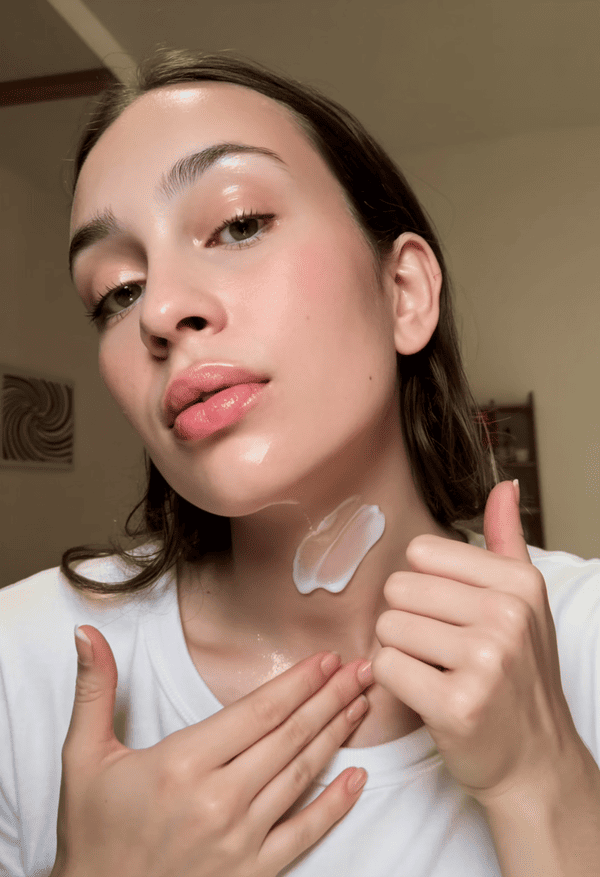
Your skin has its own ecosystem and most acne routines are quietly wiping it out.
Research published in the American Journal of Clinical Dermatology confirmed that when your skin’s microbial ecosystem gets disrupted through harsh products, over-washing, or heavy antibacterial ingredients, it creates a state called dysbiosis that’s directly linked to acne, rosacea, and eczema.
And the part that actually changes how you should think about this: acne isn’t caused by too much bad bacteria anymore.
The updated understanding is that it’s caused by a LOSS of diversity — you’re not killing the right bacteria, you’re killing all of them.
That aggressive multi-step routine with two exfoliating acids and an antibacterial wash might genuinely be making things worse.
Gentle is not weak. Gentle is strategic.
Here’s What to Do:
- Look for cleansers labeled microbiome-friendly or that contain prebiotics — they’re widely available now and worth the switch
- Cut back on how many active ingredients you’re layering at once — your barrier needs breathing room
- Thermal spring water formulas have been shown to shift microbiome composition toward a healthier balance within seven days of use
| The Right Move: La Roche-Posay’s Toleriane Hydrating Gentle Cleanser is one of the most studied microbiome-friendly cleansers out there and costs under $20 — genuinely one of the best swaps you can make. |

8The Food You’re Eating Is Spiking Your Oil Glands
The sugar-acne connection has been around forever but people still treat it like a myth, so here’s the actual mechanism so it finally sticks.
A 2024 randomized controlled trial published in Cureus put 50 acne patients on a low glycemic load diet for 12 weeks and found significant reductions in both lesion count and overall acne severity compared to the control group.
The reason high-GI foods cause breakouts is that they spike insulin, insulin spikes IGF-1, and IGF-1 directly tells your sebaceous glands to produce MORE oil and triggers androgen release on top of that.
White bread, sugary drinks, chips, crackers, anything ultra-processed — these aren’t just vaguely bad for you. They are specifically and measurably making your skin OILIER.
It’s a whole cascade that ends with clogged pores, and it starts with what’s on your plate.
Here’s What to Do:
- Start with one swap — replace a high-GI breakfast with something protein-forward and watch what happens to your skin over two to three weeks
- Pair carbs with protein or healthy fat every time to slow the insulin spike way down
- Read labels for added sugar in things you wouldn’t expect — sauces, dressings, and flavored yogurts are major hidden sources
| The Right Move: Swapping white rice for cauliflower rice even a few times a week is one of the easiest glycemic load reductions you can make without feeling like you’re on a diet. |
9Hot Water Is Breaking Down Your Skin Barrier

This one is so easy to fix and almost nobody is talking about it.
A prospective observational study measuring transepidermal water loss — that’s how much moisture your skin is leaking out through the surface — found that hot water exposure nearly DOUBLES skin moisture loss and raises skin pH at the same time.
Both of those are direct signs of a compromised barrier, and a compromised barrier means your skin can’t hold moisture, can’t fight bacteria, and reacts to everything you put on it.
When your barrier is broken down, all the actives you’re layering — your acids, your retinol, your vitamin C — are going into already-compromised skin and causing more irritation than results.
The fix is literally just turning down the temperature, and it costs nothing.
Here’s What to Do:
- Cleanse with lukewarm water and rinse with cool — that’s the full temperature protocol
- If your skin feels tight after washing, that’s your barrier telling you something went wrong — tight is NOT clean, tight is stripped
- Keep wash time short — the longer hot water sits on your face the more barrier damage accumulates
| The Right Move: Ending your shower with a 30-second cool rinse on your face is one of those tiny habits that sounds annoying until you notice your skin stopped feeling reactive all the time. |

10Omega-3s Are Working Three Ways at Once
The omega-3 story is even more impressive than it first looks, and most people only know one piece of it.
Research published in the Journal of Integrative Dermatology and a separate randomized controlled trial in the Journal of Dermatological Treatment confirmed that omega-3 supplementation works on acne through three completely distinct pathways at the same time — it directly reduces inflammatory cytokines, it lowers IGF-1 (the hormone driving excess oil production), AND it positively shifts the gut microbiome by increasing butyrate-producing bacteria that calm systemic inflammation.
That’s a topical, hormonal, and gut-level effect from a single supplement.
Most supplements work one way if you’re lucky. Omega-3s are genuinely pulling triple duty, which is why the deficiency numbers in acne patients hit so differently once you know them.
98.3% of acne patients in one study were deficient. Let that sit for a second.
Here’s What to Do:
- Take your omega-3 supplement with food — absorption is significantly better alongside a meal that contains fat
- Be consistent for at least two months before deciding it’s not working — the gut microbiome shift takes time to show up on your skin
- If you’re already eating fatty fish regularly and still breaking out, get your actual omega-3 levels tested — diet alone doesn’t always move the needle enough
| The Right Move: Combining omega-3 supplementation with a probiotic is one of the most studied gut-skin stacks right now — you’re hitting the microbiome from two directions at once. |

Why Your Skin Keeps Breaking Out
This is probably the biggest question when it comes to acne. And for many, it is also the issue that has the most impact.
People normally address their acne as if it were just an outer layer problem (e.g., using a wrong cleanser, a subpar moisturizer, etc.) and how much they wash.
However, your skin is basically a window into what’s going on inside your body. Therefore, whenever you have a breakout, this is usually a sign that your body is indicating some kind of issue that needs to be addressed.
Some of the most common reasons you get breakouts include gut imbalance, nutrient deficiencies, chronic stress, disrupted skin microbiomes, blood sugar spikes… These common root causes will never resolve with a topical treatment.
You’re still breaking out despite using all the “right stuff” because you haven’t addressed the real cause. The above list is meant to provide more knowledge rather than more products.
How Long Does It Take to See Clear Skin
Honestly, longer than anybody wants to listen to; however, shorter than most folks are afraid of.
Your skin cell renewal cycle (or “turnover”) can be anywhere from about 28 days to 40 days. This is how long you will have to wait to see if any type of change or modification made to your lifestyle (dietary/food choices, supplementation/added vitamins/minerals, routine-based) will show up on the surface of your face.
Most dermatologists and researchers within the industry would recommend waiting at least 8 to 12 weeks prior to determining an outcome of some type with regard to whether your chosen interventions are yielding positive results.
The studies regarding omega-3 were conducted over a 16-week period. The study evaluating low glycemic diet trials was conducted over a 12-week period. It generally takes time to yield real changes at a fundamental cause level, and discontinuing any given intervention after only three weeks is typically far too soon.
What to Do When Nothing Is Working
Sometimes it takes a lot to get back on track—especially if nothing has worked so far.
So take a step back and audit one area at a time rather than trying to overhaul your entire routine all at once—if you do this (change 5 different areas), then you won’t know which area(s) are working for you!
Look beyond the obvious connections to your skin; consider your overall sleep quality, current stress level, breakfast options, frequency of phone-to-face contact, etc.
Sometimes the answers will be found in less-than-glamorous places, and sometimes there’s a hormonal element involved. This is something where diet tweaks & supplements alone cannot address the root cause of the hormonal imbalance.
So while patience is essential during the process, honesty regarding when more help/support is required as opposed to simply changing routines is just as important.
When to See a Dermatologist
Some problems cannot be solved through changing your lifestyle, and being aware of that is important.
Acne that forms in deep cysts, causes pain on an ongoing basis, or creates scars are cases where you should have a discussion with a dermatologist about treatment—as opposed to this becoming something that is an option.
When there has been consistency regarding diet, routine, and other lifestyle habits and you haven’t seen improvements over three months, then a visit to a dermatologist would likely be beneficial.
At this stage, a dermatologist will do tests (to determine hormone levels) and find out if you’re deficient in certain nutrients. Additionally, they will provide prescription medications for issues that cannot be treated by creams and/or cleansers alone.
Your trip to see a dermatologist doesn’t mean you’ve lost; rather, you’re taking advantage of all the tools at your disposal to help heal your skin.
🤍 Frequently Asked Questions
Does gut health really affect your skin? +
Yes, and it’s now genetically confirmed, not just correlated. When your gut microbiome is off it triggers systemic inflammation that shows up on your face, disrupts hormones, and blocks absorption of skin-supporting nutrients like zinc and omega-3s. It’s not a wellness trend, it’s biology.
What foods cause acne breakouts? +
High-glycemic foods are the biggest driver — white bread, sugary drinks, chips, and ultra-processed snacks spike insulin, which spikes IGF-1, which tells your oil glands to overproduce. Dairy is worth cutting back on too. The skin usually reacts 2 to 7 days after the food, which is why the connection is easy to miss.
Can stress cause acne? +
Yes. Stress releases a hormone that directly stimulates oil production in your sebaceous glands, breaks down your skin barrier, and slows down how fast breakouts heal. The lag between the stressful period and the breakout is typically 2 to 7 days.
How long does it take to get clear skin? +
At minimum 8 to 12 weeks for any root-cause change to show on your face. Your skin cell turnover is roughly 28 days, so internal changes need at least one full cycle to surface. Pulling the plug at week three is almost always too early.
Is washing your face with hot water bad for acne? +
Yes. Hot water nearly doubles moisture loss from your skin and raises your pH, both signs of a damaged barrier. A damaged barrier can’t fight bacteria or hold hydration. Lukewarm to cleanse, cool to rinse.
What vitamins and minerals help clear skin? +
Zinc, omega-3s, and vitamin D have the strongest research behind them. A 2024 study found acne patients had significantly lower levels of all three compared to clear-skinned controls, with severity directly tied to how deficient they were.
How do you know if your skin microbiome is damaged? +
Reactive skin that overreacts to products it used to tolerate, breakouts that don’t respond to normal treatments, and skin that feels tight after cleansing are the main signs. If your skin gets worse the more you do to it, the microbiome is usually telling you to back off.
So, What’s Your Skin Actually Telling You?
Clear skin isn’t about finding the one perfect product — it’s about understanding what your skin is actually responding to.
The stuff on this list isn’t trendy or complicated, it’s just the information that doesn’t get talked about enough.
Pick one or two things that resonate and start there. Your skin doesn’t need a full overhaul overnight, it just needs you to finally give it what it’s been asking for.
UP NEXT > Acne Home Hacks That Actually Clear Your Skin Overnight
| Medical Disclaimer
The information provided in this article is for educational and informational purposes only and is not intended as medical advice. The content is not a substitute for professional medical advice, diagnosis, or treatment. Always seek the guidance of your doctor, dermatologist, or other qualified health provider with any questions you may have regarding a medical condition or skin concern. Never disregard professional medical advice or delay seeking it because of something you have read here. Individual results may vary. |

GLOSSUPGIRL is your one-stop blog for gorgeous fashion and beauty ideas that are trending online. Get your daily dose of GLOSSUPGIRL today!